



In Jiro Ono’s sushi restaurant in Tokyo, the apprenticeship starts with cleaning.
For months, that’s all you do. You clean, you watch, you say yes. After about four months, you’re allowed to touch fish. After years, you might stand behind the counter.
One apprentice made the same egg dish over two hundred times before Jiro deemed it acceptable. When he finally got the nod, he cried.
Around a decade. That’s how long it takes before an apprentice is considered ready to make sushi for a customer.
Rice is the thing that reveals why. It accounts for about 80% of what makes great sushi, and there’s no recipe. The moisture content changes with the season, the age of the grain, the weather that morning. The only way to learn it is to do it, badly, for years, until your hands know what your brain can’t put into words.
The apprenticeship problem
The most obvious short-term impact of AI on jobs is on younger people.
In the US, recent graduate unemployment hit its highest level in over a decade last year. In the UK, youth unemployment just overtook the EU average for the first time on record. Entry-level hiring is slowing in many parts of the labour market. AI adoption at work is being led not by the youngest employees but by higher-earning, more experienced workers.
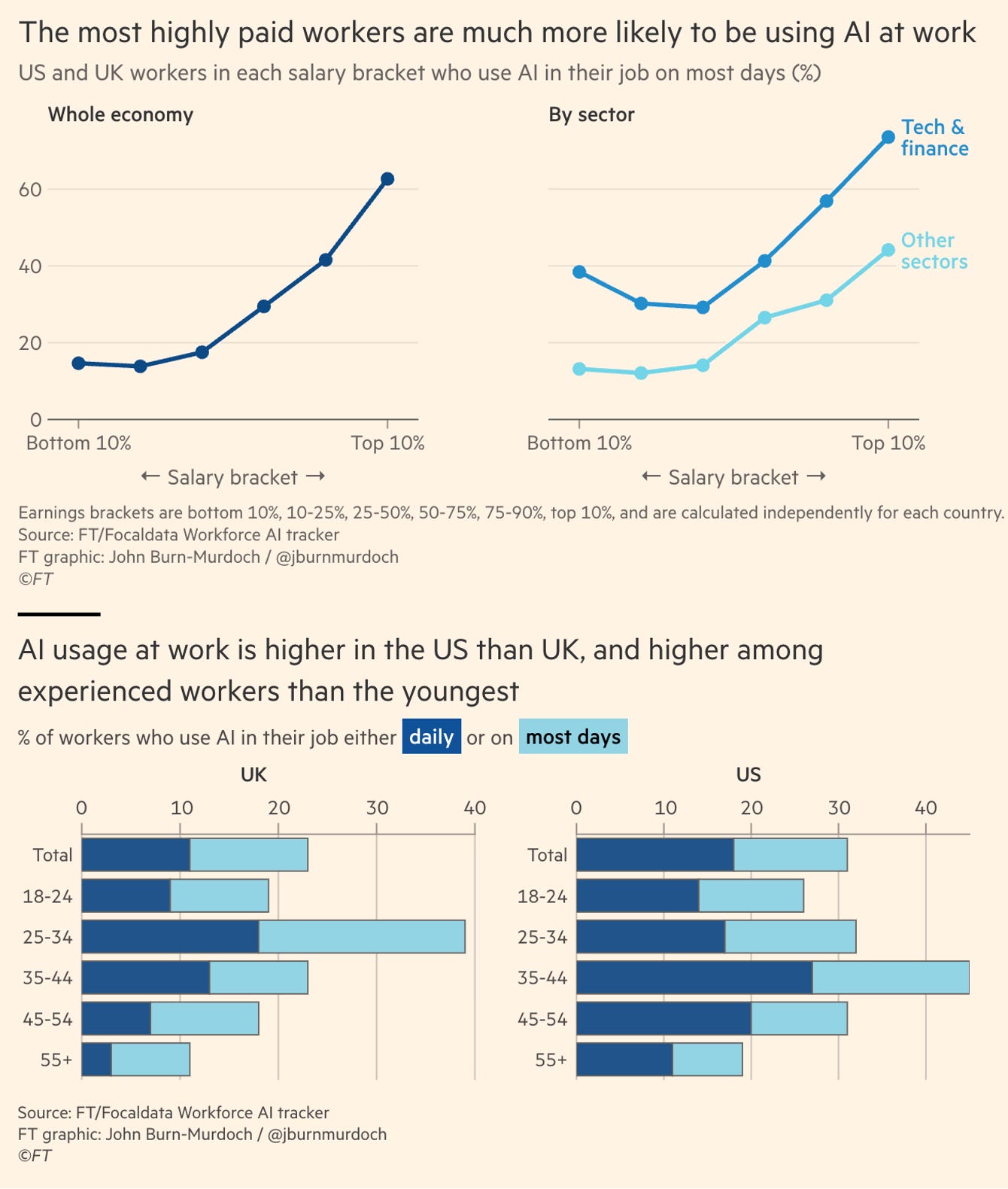
I speak to dozens of businesses every month and I’m hearing the same thing - a feeling, from leadership at least, that AI can now do a lot of the work we’d typically give to people just starting out.
They’re not entirely wrong.
AI is very good at producing work that looks like it came from someone who knows what they’re doing. And experienced people can usually tell when it’s actually good - that’s why they’re comfortable using it. They’ve spent years developing the instinct that lets them spot when something’s off.
The problem is where that instinct came from.
It came from doing the work badly for years. From producing stuff, being told it wasn’t good enough. Developing a feel for when something isn’t quite right - the kind of thing you can’t get from reading about it. The reps.
AI won’t tell you your rice is sh*t. It’ll tell you it’s excellent and move on to the next question.
And if we stop letting juniors do that work, the next generation won’t have the instinct that today’s leaders can rely on.
The value of a fresh pair of eyes
That’s the long-term cost. There’s a short-term one too.
Juniors aren’t just trainees-in-waiting. They bring something to a team that experienced people can’t, because they don’t carry the baggage of how things used to be done. They ask the questions you’ve stopped asking. They notice the things you’ve trained yourself not to see.
Removing them from teams doesn’t just delay the problem. It makes today’s work worse too.
So before you automate a task that a junior used to own, ask what they were learning by doing it. If the answer is genuinely nothing much, then fine - automate it. But if they were developing an instinct for what good looks like - the slippery idea of ‘taste’ that’s become so popular in the AI era - you need to replace that learning with something more deliberate.
So who’s learning to make the rice?
Thanks for reading.
Ollie
Ollie on Work is a weekly newsletter about what I’m learning from building with AI, advising leadership teams, and trying to bridge the gap between what technology can do and how businesses actually work. If someone forwarded this to you, you can subscribe here: