


Why are remote jobs suddenly so hard to get?
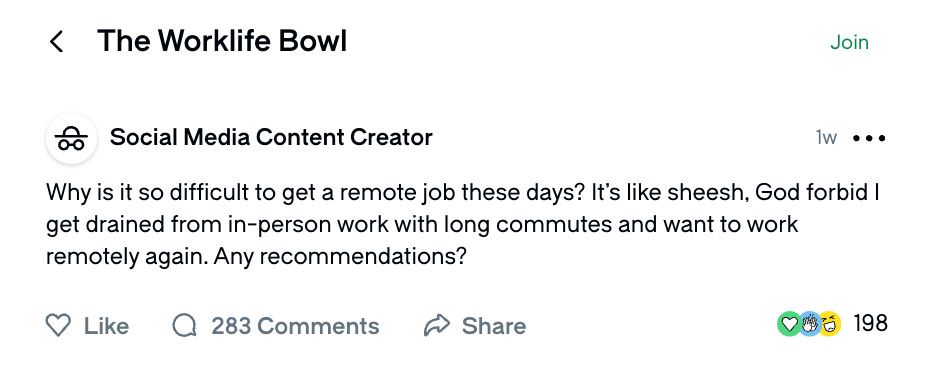
That was the headline question in a 283-comment Glassdoor thread I read last week. On the surface it looked like every remote work debate of the past few years - managers accusing staff of slacking, employees accusing leaders of power plays, economic realities rubbing up against lifestyle demands.
But buried in those comments was something more revealing.
People weren't just arguing about commutes. They were voicing fear that the careers they'd built their lives around are no longer secure. For them, remote work has become a proxy for a deeper anxiety: career fragility.
“I've applied to over 600 jobs in the last year and nothing.”
“I've been unemployed for six months - at this point I'll take any office role.”
“It took me over a year to find work even though I said I'd do remote, hybrid, whatever.”
Why this is happening now
Experts are currently debating whether AI progress is stalling or surging.
But real people don't care - they're already living the disruption.
The Glassdoor thread wasn't full of people discussing scaling laws - it was people observing the careers they’ve been working in for decades become unsustainable.
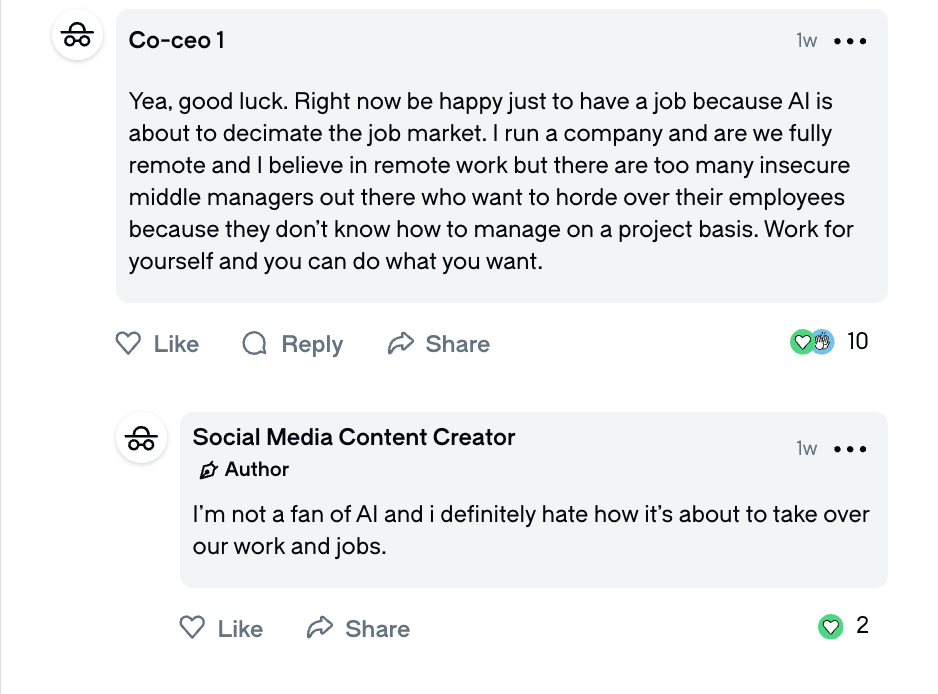
We're caught between two forces. AI progress that's real but unpredictable, and career frameworks designed for a more stable world.
Career cycles that once stretched over decades now compress into months. Flash careers emerge and vanish - prompt engineer, AI trainer - roles that seem momentarily essential before quickly being absorbed into broader jobs or automated away entirely.
The underlying message?
Don't build your future around job titles. Focus on the underlying capabilities that persist when the labels disappear.
The Career Expiration Trap
This is exactly what I call the Career Expiration Trap - when the strategies that got you here won't get you there, but you don't realise it until it's too late.
The thread participants are living it in real time.
Traditional career advice assumes stability: get educated, work hard, climb the ladder. But that playbook breaks when the ladder keeps moving. The skills that made you valuable five years ago might be table stakes today. The roles you're targeting might not exist next year.
The people panicking about remote work are missing the deeper shift.
Geography is just one variable that’s becoming fluid. Industry boundaries are blurring. Job descriptions are morphing. Company structures are flattening.
The entire architecture of careers is becoming more dynamic.
What actually matters now
The most resilient voices in that thread shared three characteristics:
They'd stopped assuming their current skills would remain valuable
They'd started building location-independent capabilities
They were creating options rather than waiting for opportunities
This is where building entrepreneurial, power skills become essential.
Not because everyone needs to start a business, but because everyone needs to think like someone building something from scratch. That means:
Learning quickly when the rules change
Creating value independently
Communicating clearly and confidently
Building momentum through uncertainty rather than waiting for clarity
Leaders who understand this stop policing office attendance and start investing in their teams' capability to navigate disruption. They make time for experimentation, reward learning over compliance, and help people build skills that work anywhere.
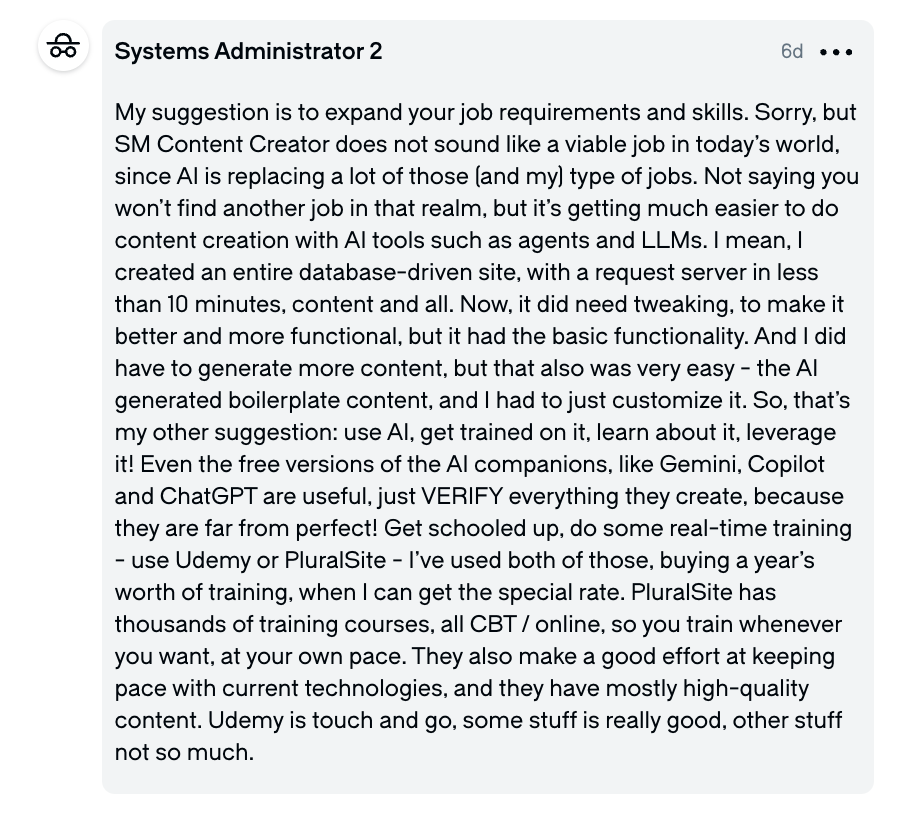
Individuals who understand this stop chasing perfect work arrangements and start building capabilities that create choice - like AI fluency and communication skills.
All of which takes time and deliberate practice.
The real fight
So remote vs office isn't the real debate.
It's fragile careers versus resilient ones.
The thread participants fighting hardest for remote work are often the ones most dependent on external validation - job titles, company policies, manager approval.
They want remote work because they think it gives them control, but they're still building careers that depend on someone else's permission.
Remote work was never really about the office.
It was always about autonomy - the freedom to choose how and when you get your best work done. To build a career on your terms rather than someone else's timeline. That freedom still exists, but the truth is, most companies and managers aren’t going to give it to you. At least, that’s the message crying out of this Glassdoor thread.
So what’s the alternative?
Create new possibilities yourself rather than waiting for someone else to grant them.
The anxiety in that thread is rational. Career fragility is real. But the solution isn't fighting harder for scarce remote roles. It's building the adaptability to thrive when the rules change faster than institutions can keep up.
And there’s no time like the present.
Enjoy the weekend,
Ollie