


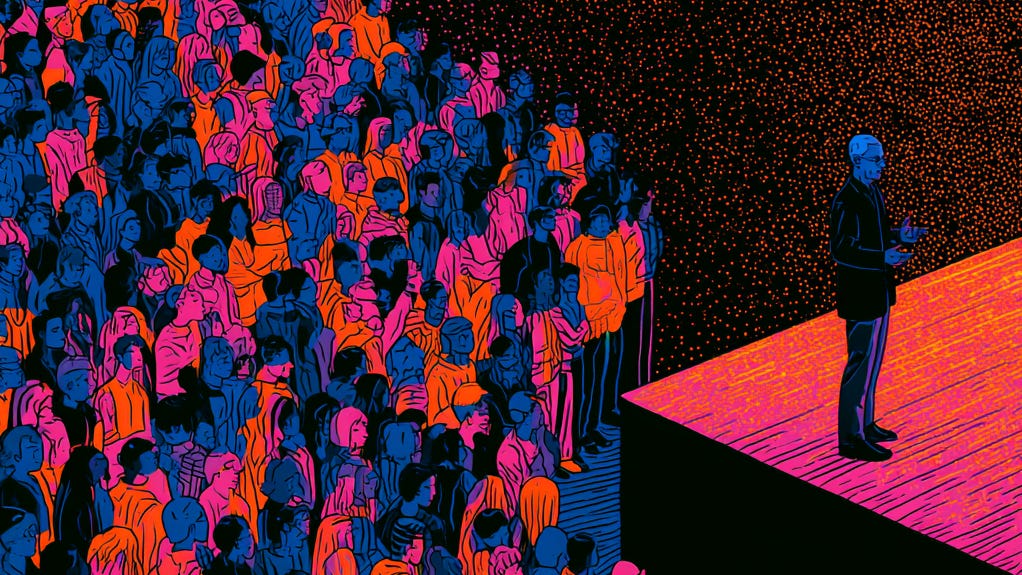
Former Google CEO, Eric Schmidt, stood in front of about ten thousand graduates at the University of Arizona on Sunday, and a few minutes in, the booing started.
Why?
He mentioned AI.
“I can hear you,” he said, over the noise, and kept going.
He named the graduates’ fear back to them - the machines are coming, the jobs are evaporating, you are inheriting a mess you did not make - and called it a rational fear.
But when someone offers you a seat on a rocket ship, he said, you do not ask which seat. You just get on.
It is tempting to file this under out-of-touch billionaire gets what was coming to him - but the speech was stranger than that. Because it was two speeches at once. One was a real defence of agency - their future was not yet written, theirs to shape. The other told them the rocket ship was already here, and the only move was to get on.
A stadium of twenty-two-year-olds heard only the second speech.
He was trying to encourage them - but then undid it in the same breath.
And Schmidt was not the only one.
Around the same time, a speaker at the University of Central Florida called AI the next industrial revolution and was drowned out by boos, while a music executive at Middle Tennessee State told graduates to “deal with it.”
What the booing was actually aimed at
So what’s really going on here?
Well, I wanted to know whether the booing was just a crowd doing what crowds do. So I went to the comments, on YouTube and Reddit.
Last year I did this on a larger scale: fifty thousand comments under three Diary of a CEO episodes about AI and work. What struck me then was the range. There was fear, but also curiosity, scepticism, people describing what they had already built. Enough variety to sort into five rough types.
Based on my research this week, there’s no longer so much diversity of opinion.
In fact, if you read the threads under the booing clips there’s one overriding feeling: anger (and in the billionaire tech CEO’s case, a large dollop of contempt).
This is seemingly not technophobia, by the way. Many of the angriest comments are written by people who use AI every day, often because their employer requires it.
Instead, the perception is that all three speakers were delivering the same instruction - this is settled, your future is fixed, and the only move left to you is your attitude. Be grateful. “Get on the rocket ship." That was what the boos were aimed at.
And the commenters flipped that rocket-ship line back on Schmidt - not passengers being offered a seat, but “the fuel”.
Zoom out, look beyond the comments, and you’ll see a similar story.
In recent polling, 70% of Americans say AI is moving too fast, and just 18% of young people say they feel hopeful about it.
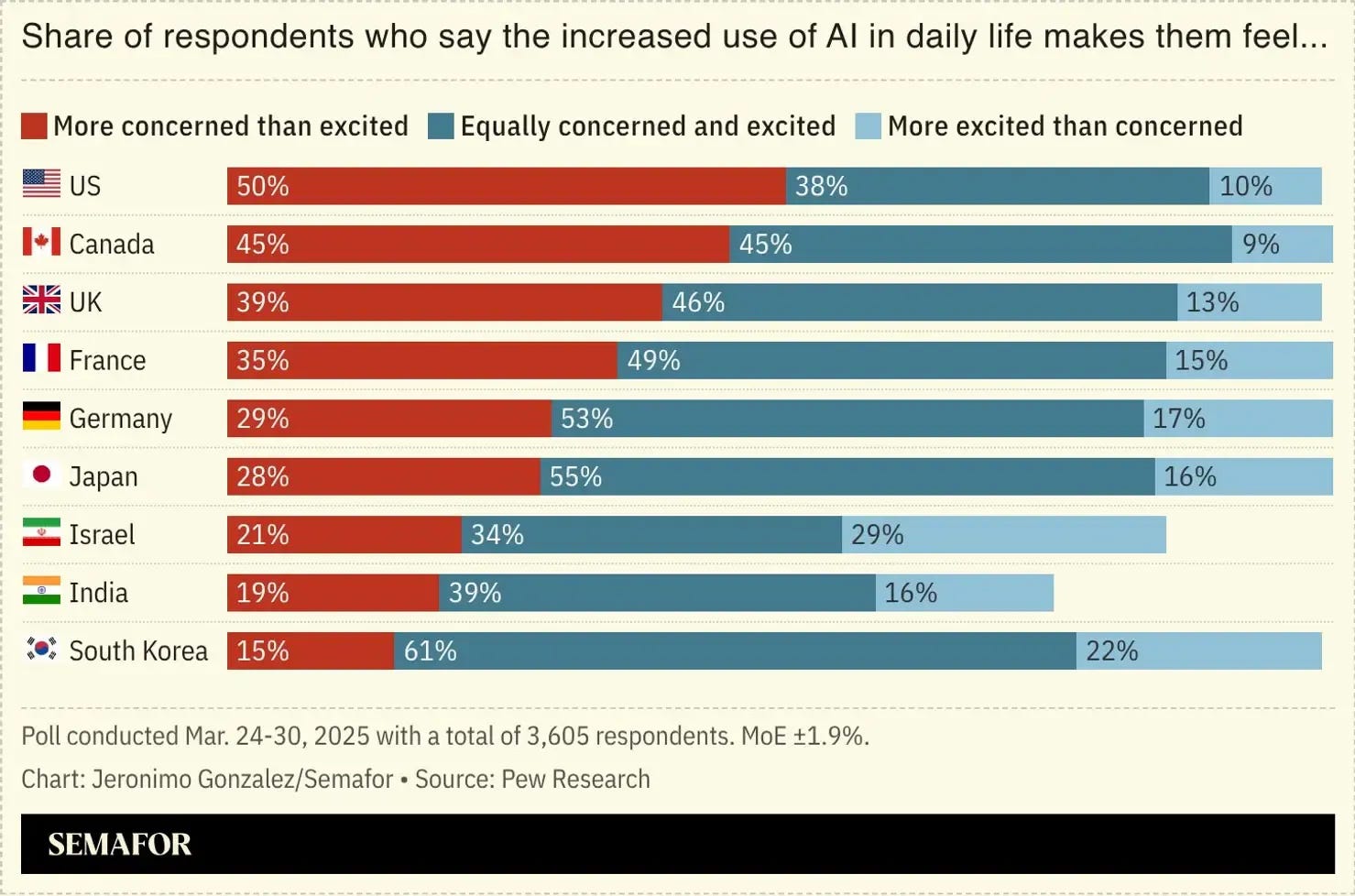
There is also a real feeling of grievance in the case of the students.
A version of the deal these graduates were sold - do the degree, take on the debt, a career follows - has been rewritten while they were still holding up their end. One of the sharper observers called the feeling not fear but a sense of having been “double-crossed.”
You do not boo a weather forecast. You boo a promise you believe someone has broken.
Why uncertainty is the argument for agency, not against it
So where does that leave the advice?
Well, agency still matters - but not because it guarantees a safe, secure future. It matters precisely because nobody knows what is coming.
Because the evidence is genuinely split. Some of it shows AI hollowing out entry-level work, while some finds no clear sign of AI in the job numbers at all. They are looking at the same labour market and disagreeing about what’s happening.
And that is the point writ large.
If you knew you would be fine, what you did next would not matter. If you knew you were finished, it would not help. It is because no one knows, that what you do still counts - building range, trying things, treating your career as something to act on, not something that happens to you.
And frankly, it is not just young people.
If you are reading this, you may be doing two jobs at once. Leading other people through this, and wondering about your own working life. The answer to both is the same - stop waiting for the picture to get any clearer, because it will not. Act now.
Oh, and the doomer belief - that nothing they do matters - is even more dangerous. Believe it, and you stop trying altogether. And not trying is what will make it true.
Ten thousand graduates filed out of that stadium into an uncertain future. What happens to them now will not be decided by an ‘inspiring’ speech, or by their booing. It will be decided by what each of them does next. And, crucially, whether we give them the chance to learn and make mistakes the way we did.
That was always true - AI has just made it impossible to ignore.
Thanks for reading.
Ollie
Ollie on Work is a weekly newsletter about what I’m learning from building with AI, advising leadership teams, and trying to bridge the gap between what technology can do and how businesses actually work. If someone forwarded this to you, you can subscribe here: